
Moving in the next month?
There’s a lot to keep track of before moving day. Packing is only one part of it. You may also need to update your address, transfer utilities, gather records, and confirm important dates.
The good news is that you don’t have to do everything at once.
A little progress each day can make moving week feel much more organized. Here’s a practical 30-day moving checklist to help you get started.
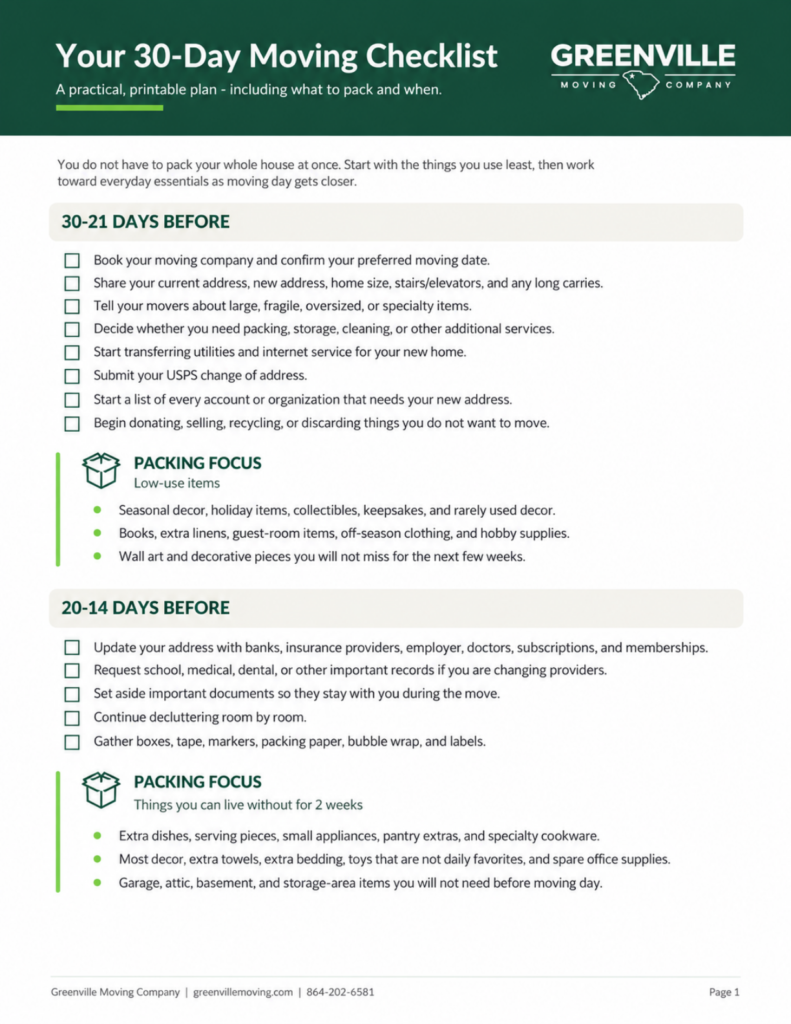
PRINTABLE VERSION
take the checklist with you
Download the printable 30-Day Moving Checklist and check things off as moving day gets closer.
1. Schedule your moving company
If you haven’t booked your movers yet, start here.
Moving schedules can fill up quickly, especially on weekends, during the summer, and near the beginning or end of the month. Booking early gives you a better chance of getting the date you need.
When you request an estimate, be ready to share:
- Your current and new addresses
- Your preferred moving date
- The size of your home
- Any stairs, elevators, or long walking distances
- Large or fragile items
- Whether you need packing or storage
Your estimate is usually based on the inventory, access details, and services you provide. If something changes before moving day, let your moving company know so they can update the plan.
2. Start transferring utilities and internet service
Contact your utility and internet providers to schedule service at your new home. You may need to transfer, cancel, or start service for:
- Electricity
- Water and sewer
- Natural gas
- Internet
- Trash and recycling
- Security systems
- Cable or other home services
Try to have your new services active by moving day. You may also want to keep utilities on at your current home for an extra day in case you need to finish cleaning or complete a final walkthrough.
3. Submit your change of address with USPS
Complete a change of address request through the United States Postal Service.
This allows USPS to forward much of your mail to your new address for a limited time. It gives you a little breathing room while you update your address directly with businesses and organizations.
Mail forwarding is helpful, but it won’t replace updating your accounts.
4. Update your address with important accounts
Make a list of every business or organization that needs your new address.
This may include:
- Banks and credit card companies
- Insurance providers
- Your employer
- Retirement or investment accounts
- Doctors and pharmacies
- Subscription services
- Online shopping accounts
- Memberships
- Schools or childcare providers
Updating these accounts early can help prevent missed bills, delayed paperwork, and packages arriving at your old home.
5. Request school and medical records
If you’re changing schools, doctors, dentists, or other care providers, request your records early.
Some offices may need several days to process your request. Starting now gives you time to complete any forms and follow up if something is missing.
Keep important documents with you during the move. Don’t pack them somewhere deep in the moving truck.
6. Donate or sell what you don’t want to move
Moving is a good time to decide what you actually want to take with you. You don’t have to work through the whole house in one day. Start with one room, closet, or category at a time. Look for items you can donate, sell, recycle, or throw away, such as:
- Clothes you no longer wear
- Duplicate kitchen items
- Furniture you don’t need
- Outgrown toys
- Old electronics
- Expired pantry items
- Garage items you rarely use
The less you move, the less you’ll need to pack, carry, unpack, and organize later.
7. Gather packing supplies
Having the right supplies nearby makes it easier to pack a little at a time. You may need:
- Moving boxes in different sizes
- Packing tape
- Markers
- Packing paper
- Bubble wrap
- Mattress bags
- Resealable plastic bags
- Labels
- Specialty boxes for dishes, TVs, or clothing
For the lowest-cost option, start by looking for free, clean boxes in local Facebook groups, Chick-Fil-A restaurants, neighborhood groups, grocery stores, bookstores, or liquor stores.
For new supplies, Walmart is a convenient place to find boxes, tape, packing paper, bubble wrap, mattress covers, and moving kits in one trip. Home Depot is another good option for sturdy boxes, including dish, wardrobe, TV, and heavy-duty boxes. Its online moving calculator can also help you estimate how many supplies you’ll need.
Dollar Tree can be useful for smaller items such as markers, labels, resealable bags, and individual rolls of packing tape. For larger quantities of tape or packing materials, compare the cost per roll or per foot before buying. The smallest package isn’t always the least expensive overall.
And remember, try not to fill large boxes with heavy items. Books, canned goods, and other dense items are easier to carry in smaller boxes.
8. Start packing items you rarely use
You don’t need to pack everything right away. Start with belongings you probably won’t need before moving day, including:
- Seasonal decorations
- Off-season clothing
- Books
- Decorative items
- Extra linens
- Guest-room items
- Specialty kitchen appliances
- Attic, garage, or storage items
Label each box with what’s inside and which room it belongs in. Clear labels will save you time when you start unpacking.
9. Make a list of special-handling items
Walk through your home and note anything that may need extra care, equipment, or preparation. This could include:
- Pianos
- Safes
- Large mirrors
- Artwork
- Antiques
- Exercise equipment
- Oversized furniture
- Appliances
- Fragile electronics
- Items that need to be taken apart
Let your moving company know about these items before moving day. That helps the crew bring the right equipment and plan enough time. You should also ask which items movers can’t transport. This often includes flammable, hazardous, pressurized, or perishable items.
10. Confirm important dates and access details
Check in with your realtor, landlord, closing attorney, property manager, or moving company before moving week. Make sure everyone is working from the same dates and understands the plan.
Confirm:
- Closing or lease dates
- Key pickup and final walkthroughs
- Elevator or loading dock reservations
- Parking arrangements and building access
- Move-in or move-out rules
- Cleaning appointments
- Your movers’ arrival window
- Utility start dates
For apartments, condos, or managed communities, ask whether the property requires proof of insurance, a security deposit, a gate code, or advance notice before the moving truck arrives.
It also helps to keep important phone numbers, confirmation emails, addresses, and access instructions together in one place. That way, you’re not searching for details on moving day.
It’s much easier to fix a scheduling or access issue now than when the truck is already outside.
Your 30-day moving checklist
- Schedule your moving company
- Transfer utilities and internet service
- Submit your USPS change of address
- Update your address with important accounts
- Request school or medical records
- Donate, sell, or remove unwanted items
- Gather packing supplies
- Pack seasonal and rarely used belongings
- Identify items that need special handling
- Confirm important dates and access details
Make a little progress each day
You don’t have to pack your entire home in one weekend.
Pack a few boxes. Make one phone call. Update one account. Small steps can make a big difference when moving week arrives.
Moving is a major transition, and it’s normal for it to feel like a lot. A clear plan can help you stay organized and focus on one task at a time.
Planning a move in Greenville?
At Greenville Moving Company, we help people move throughout Greenville and the Upstate.
We offer local and long-distance moving, packing, storage, and help with items that need special care. We’ll help you understand the plan, know what to expect, and feel prepared for moving day.
Moving to Greenville? Let’s make it easy. Get a quote.